Why Is God’s Kingdom Worth Everything?
Published 18 September 2026
Some discoveries change what we value. A person can walk across the same field a hundred times and see only soil, weeds, and stones. Then, one day, the ground gives way to something hidden, something so precious that ordinary life cannot remain ordinary any more.
That is the shock and beauty of Jesus’ parable of the hidden treasure.
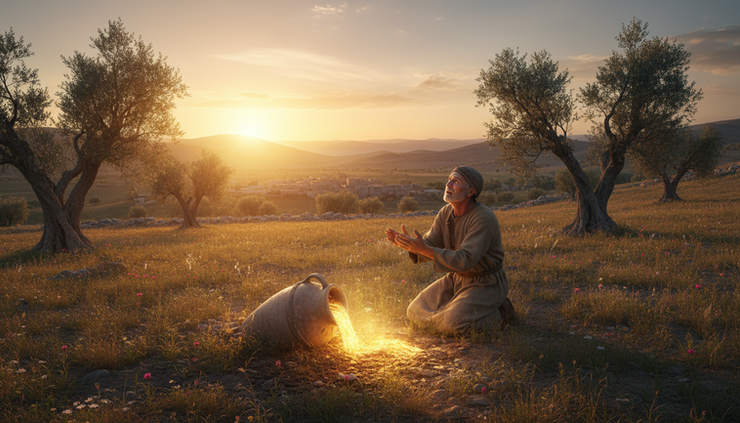
In Matthew 13:44, Jesus describes a person who finds treasure hidden in a field. In joy, he goes and sells all he has so he can buy that field. The story is short, but it carries a holy weight. Jesus is teaching us that the kingdom of heaven is not a small religious interest. It is not a weekend hobby, a comforting thought, or a moral improvement plan. It is treasure. It is worth more than everything else we are tempted to cling to.
This parable asks a searching question: if we truly saw the worth of God’s reign, what would we gladly release to receive it?
What Does Jesus Want Us to See in the Hidden Treasure?
Jesus often taught deep truth through small scenes. A seed. A net. A lamp. A lost coin. A field. In this parable, He gives us a picture almost anyone can understand.
A man is in a field. He finds treasure. He recognises its value. He hides it again, then sells all he has and buys the field. His actions may look extreme to an onlooker, but they make perfect sense to him. Why? Because he has seen what others have not seen.
That is the turning point.
The treasure had been there before he found it. It did not become valuable when he noticed it. Its worth was already real. His discovery changed him, not the treasure.
So it is with the kingdom of God. The reign of God is already glorious, already true, already eternal. Christ is already Lord. Grace is already rich. Forgiveness is already more costly and more beautiful than we can measure. Yet many pass by the field without stopping. Some see religion. Some see rules. Some see tradition. Some see an old book and a weekly service.
But the one whose eyes are opened sees treasure.
To see the kingdom is to realise that God offers more than help with life. He offers life itself. He gives reconciliation, adoption, pardon, hope, holiness, and a future that death cannot steal.
The parable is not asking whether we have added faith to our lives. It is asking whether we have seen Christ as supremely valuable.
Why Is Gods kingdom Worth More Than Everything We Own?
The treasure in the field represents the immeasurable worth of belonging under God’s gracious rule. It points us to a reality far greater than wealth, comfort, reputation, or control. Gods kingdom is worth everything because it brings us into right relationship with the King.
Many people spend life collecting things that cannot finally carry the weight of the soul. Possessions can be enjoyed, but they cannot forgive sin. Success can open doors, but it cannot conquer death. Approval can feel sweet for a moment, but it cannot heal the deepest ache of being known and loved by God.
The kingdom gives what nothing else can give.
It gives peace with God. Through Christ, the barrier of sin is removed, not by our effort, but by His mercy.
It gives a new identity. We are not merely improved people trying harder. We are made children of God, called by grace, and held by love.
It gives a new direction. Life is no longer a random series of appetites, fears, and ambitions. We begin to live under a divine purpose that is larger than our plans and kinder than our anxieties.
It gives a hope that endures. The kingdom cannot be shaken by market changes, human praise, illness, ageing, disappointment, or the grave.
This is why the man in the parable sells everything with joy. He is not acting out of grim duty. He is not muttering, “I suppose I must give this up.” He has found something better. His sacrifice flows from delight.
That is a vital spiritual lesson. Christian surrender is not meant to be joyless loss. It is the glad exchange of lesser things for the greatest gift.

What Does It Mean to Sell Everything for the Treasure?
Jesus is not teaching that we can buy salvation. Grace is not for sale. No amount of money, discipline, sacrifice, or religious activity can purchase the mercy of God. We are saved by grace through faith, because Christ gave Himself for us.
So what does the selling mean?
It means that when the kingdom is truly seen, everything else loses its claim to be ultimate.
Selling all is the language of surrender. It is the obedient response of a heart that has found the highest good. For one person, that surrender may involve pride. For another, bitterness. For another, a relationship that pulls the heart away from Christ. For another, the constant need to be admired, secure, comfortable, or in control.
The question is not only, “What have I given up?” A deeper question is, “What still owns me?”
What might we need to release?
There are treasures that are not evil in themselves, yet they become dangerous when they sit on the throne of the heart. Work is good, but it cannot be our saviour. Family is a gift, but even family cannot take the place of God. Comfort is pleasant, but comfort can make us spiritually sleepy. Money can serve good purposes, but it becomes cruel when we trust it for our peace.
The Holy Spirit often reveals our false treasures through simple questions:
What do I fear losing most?
What do I believe I must have before I can be content?
What do I defend even when God’s Word challenges it?
What do I run to first when I am afraid?
What promise of Christ do I find hardest to trust?
These questions are not meant to shame us. They are invitations to freedom. The Lord exposes our idols not to crush us, but to rescue us from poor substitutes.
Why does sacrifice become joyful?
The man in Jesus’ story sells everything “for joy”. That little phrase changes the whole tone of the parable.
Joy does not mean the sacrifice is painless. Letting go can ache. Obedience can cost us deeply. Following Christ may affect our ambitions, habits, friendships, spending, speech, and private desires. The cross is not decoration. Jesus calls His disciples to take it up.
Yet beneath the cost, there is a stronger gladness. The believer says, “What I lose cannot compare with what I have found.”
This is not denial. It is clear sight.
A person who leaves a leaking boat for solid ground does not spend life grieving the boat. A person cured of a deadly illness does not mourn the medicine. A person welcomed home after years in exile does not complain that the road was long.
When Christ becomes our treasure, surrender becomes the path of joy.
How Does Recognising the Treasure Transform a Life?
The discovery of the hidden treasure does more than change a person’s beliefs. It changes their loves. And when loves change, life changes.
A person may try to reform behaviour without receiving a new heart. That can produce pressure, pride, or despair. But when someone sees the beauty of Christ and the worth of His kingdom, obedience begins to grow from affection. We start to want what God wants. We grieve over sin not only because it brings consequences, but because it wounds communion with the One we love.
This transformation often shows itself quietly.
A resentful heart begins to forgive. A restless heart learns to pray. A selfish heart becomes generous. A fearful heart takes brave steps of obedience. A distracted heart becomes hungry for Scripture. A life driven by comparison begins to rest in being known by God.
Not all at once. Not without struggle. Yet truly.
Grace works like treasure discovered in the soil. It brings hidden things to light. It reshapes priorities from the inside. It teaches us to measure success by faithfulness, not applause. It teaches us to see people not as interruptions, rivals, or burdens, but as souls loved by God.

How does the kingdom reorder our priorities?
The kingdom teaches us to ask better questions.
Instead of asking only, “What will make me happy now?” we begin to ask, “What will honour Christ?”
Instead of asking, “How can I protect my image?” we ask, “How can I walk in truth?”
Instead of asking, “How much can I keep?” we ask, “How much good can love do through what God has entrusted to me?”
Instead of asking, “What is the easiest path?” we ask, “Where is the Lord leading?”
This does not make life narrow. It makes life whole. The kingdom does not shrink our humanity. It restores it. Under the rule of Christ, work becomes worship, home becomes a place of discipleship, suffering becomes a place where grace can be known, and ordinary acts of kindness become signs of the coming kingdom.
The treasure gives meaning to small faithfulness.
A cup of water in Jesus’ name matters. A hidden prayer matters. A quiet apology matters. A generous gift no one sees matters. A decision to resist temptation when no one is watching matters. In the kingdom, nothing offered to God in love is wasted.
Why Is the Treasure Hidden from Some and Revealed to Others?
The parable says the treasure was hidden in a field. That hiddenness is worth pondering.
God’s kingdom does not always arrive in the form people expect. Many look for power, spectacle, and instant triumph. Jesus came in humility. He was born in poverty, lived in obedience, welcomed sinners, touched the unclean, washed feet, and went to a cross.
To proud eyes, this can seem weak. To hungry hearts, it is the wisdom and power of God.
The treasure is hidden not because God is cruel, but because the kingdom is recognised by faith. It is received by those willing to become like children, those who know their need, those who stop pretending they can save themselves.
This is why prayer matters. We need God to open our eyes. We need more than information. We need illumination. A person can know the words of the parable and still miss the treasure. The heart must be awakened.
A simple prayer may begin that awakening:
Lord, show me the worth of Your kingdom. Open my eyes to Christ. Teach me to treasure what You treasure, and give me grace to release what keeps me from following You.
That prayer is not small. It is the kind of prayer God delights to answer.
What If We Are Afraid of What Following Christ May Cost?
Many sincere people hesitate at the edge of surrender. They sense the call of Christ, yet fear rises within them. What will I lose? What will change? What if obedience costs more than I can bear?
God does not mock those fears. Jesus never tricked people into discipleship. He told the truth. Following Him may cost relationships, ambitions, habits, and approval. The rich young ruler felt that cost. The disciples felt it. Many believers across the world still feel it.
But we must also ask: what does it cost not to follow?
To cling to lesser treasures is to lose the joy we were made for. To keep sin is to keep chains. To protect our own little kingdoms is to miss the freedom of belonging to the true King.
Christ does not call us to emptiness. He calls us to Himself.
There is kindness in His command. When He says, “Follow Me,” He is not taking life away. He is leading us into life that is deeper, cleaner, stronger, and eternal. The hands that ask us to release our idols are nail-scarred hands. He gave everything first.
So when surrender feels frightening, look again at the treasure. Look at the mercy of Christ. Look at the cross. Look at the empty tomb. Look at the Father’s welcome. The more clearly we see Him, the more trust grows.

How Can We Seek This Treasure Today?
Seeking the kingdom is not a one-time emotional moment. It is a daily turning of the heart towards God. It begins with grace, continues by grace, and ends in glory.
We seek the treasure when we come to Christ honestly, without pretending we are whole without Him. We seek it when we open Scripture with humility. We seek it when we pray, not merely for God to improve our circumstances, but for Him to reign in us. We seek it when we confess sin quickly and receive forgiveness gratefully. We seek it when we choose obedience in ordinary places.
Here are simple ways to keep seeking:
Read one Gospel slowly, asking, “What does this show me about the King?”
Pray each morning, “Lord, rule my heart today.”
Name one lesser treasure that competes for your trust.
Practise one act of hidden obedience that only God sees.
Speak with a mature believer about what surrender looks like in this season.
The hidden treasure is not far from those who seek with a humble heart. Christ is not reluctant to be found. He stands ready with mercy, truth, and life.
The parable leaves us with joy. Not guilt. Not fear. Joy. A man found treasure and gladly gave up everything to have it.
May we have that same holy clarity. May we see the kingdom as more precious than comfort, applause, wealth, control, or even life itself. May we count the cost, then see that Christ is better still.
And may our lives quietly preach this truth: when the treasure is real, no sacrifice is wasted.



Comments